

FAQs
On Wastewater Equipment
Design, Troubleshooting, Specifications & Long-Term Support
Define the flow rate (average daily, peak, minimum, future). Identify the fluid (raw sewage, sludge, scum, grit, septage, solids size, percent solids, concerns with ragging). Identify the static head. Calculate friction losses. Calculate Total Dynamic Head (TDH). Build a system curve. Select a pump type (submersible, dry pit, chopper, grinder, progressive cavity, vortex). Review horsepower requirements, controls, materials, seal type, and whether redundancy is needed.
Aqua Solutions can help evaluate system requirements and coordinate with manufacturers to identify the most suitable pump for your application.
Primary Rating Point – The primary rating point represents the required flow and total dynamic head (TDH) at which the pump is expected to operate during normal service conditions. This point is used to select a pump that meets the system’s primary operating requirements while achieving efficient and reliable performance.
Secondary Rating Point – The secondary rating point represents an additional operating condition that the pump may encounter during normal operation. It is used to verify that the selected pump can perform effectively across the expected operating range, including varying system demands, wet well levels, or process conditions.
An oversized pump often operates far from its Best Efficiency Point (BEP), resulting in wasted energy, excessive vibration, increased wear, and higher maintenance costs. Common signs include throttled discharge valves, frequent pump cycling, excessive flow rates, or motor loads that are consistently lower than expected.
If your pump is not operating near its intended design point, it may be worth reviewing system conditions, flow requirements, and pump performance data. A pump assessment can help determine whether modifications, controls, or a replacement pump would improve efficiency and reliability.
This depends on sludge concentration, viscosity, solids content, and application requirements. Common technologies include progressive cavity pumps (SEEPEX) and centrifugal pumps (WILO OR GRUNDFOS). Selecting the right technology requires evaluating the process conditions and performance goals of the facility.
Grinders are used upstream (ahead) of pumps or treatment processes where wipes, rags, and other debris can cause clogging or equipment damage. They help reduce solids size, improve pump reliability, and protect downstream equipment from excessive wear or blockages.Grinders are commonly found in lift stations, headworks, prior to sludge pumps, and at septage receiving stations.
There are many different types of blowers used in wastewater aeration systems depending on the application requirements. Positive displacement (lobe) blowers are known for their simple operation, lower operating cost, and durable performance, making them common in small- to medium-sized plants. Turbo blowers are commonly used in larger plants with higher SCFM requirements because of their high energy efficiency, which can reduce operating costs. Screw (hybrid) blowers combine features of turbo and positive displacement blowers and perform well with variable airflow demand.
To size a blower accurately, you’ll need airflow requirements (SCFM), operating pressure, elevation, air temperature, process demand, and future expansion considerations. Understanding dissolved oxygen goals and treatment process requirements is also critical for proper selection.
.The operating range for blowers includes minimum and maximum airflow, turndown requirements, seasonal changes, and future expansion.
Wastewater pumps commonly clog because of wipes, rags, grease, stringy debris, or improper pump selection. Other causes include low pipe velocity, poor wet well design, and pumps operating too far off their intended curve. Using non-clog pumps, grinders, and maintaining proper system design can help reduce clogging issues.
Cavitation occurs when pressure at the pump inlet falls below the fluid’s vapor pressure, creating vapor bubbles that collapse inside the pump. Common causes include inadequate NPSH available, high suction lift, restricted suction piping, or elevated fluid temperatures. Left unchecked, cavitation can cause vibration, noise, and severe pump damage.
A plug flow system moves wastewater through a process in stages with limited mixing between zones. A complete mix system continuously blends incoming wastewater throughout the entire basin. The choice depends on treatment goals, nutrient removal requirements, and process design.
NPSHa (Net Positive Suction Head Available) – Amount of pressure available at the pump suction flange.
NPSHr (Net Positive Suction Head Required) – Minimum pressure the pump needs to see to avoid cavitation.
RULE OF THUMB: ALWAYS HAVE NPSHa > NPSHr
SCFM stands for Standard Cubic Feet per Minute and is a standardized way to measure airflow. It corrects airflow to standard temperature and pressure conditions so blower and air system performance can be compared consistently across different operating environments.
Tertiary treatment is an advanced stage of wastewater treatment performed after primary and secondary treatment to further improve effluent quality. It is commonly used to remove fine solids, nutrients, bacteria, and other contaminants before discharge or water reuse.
A specification, or “spec,” is a detailed engineering document that defines the technical, material, performance, and installation requirements for equipment and construction on a wastewater project. Specifications help ensure all equipment meets the project’s design and operational standards.
A submittal is a package of technical documents provided by a contractor or manufacturer for engineer review before equipment is approved for installation. Submittals typically include shop drawings, product data, dimensions, certifications, and performance information.
NSF certification verifies that a product has been tested to meet specific public health and safety standards. In the water industry, NSF/ANSI 61 is commonly required to confirm that equipment and materials are safe for contact with drinking water.
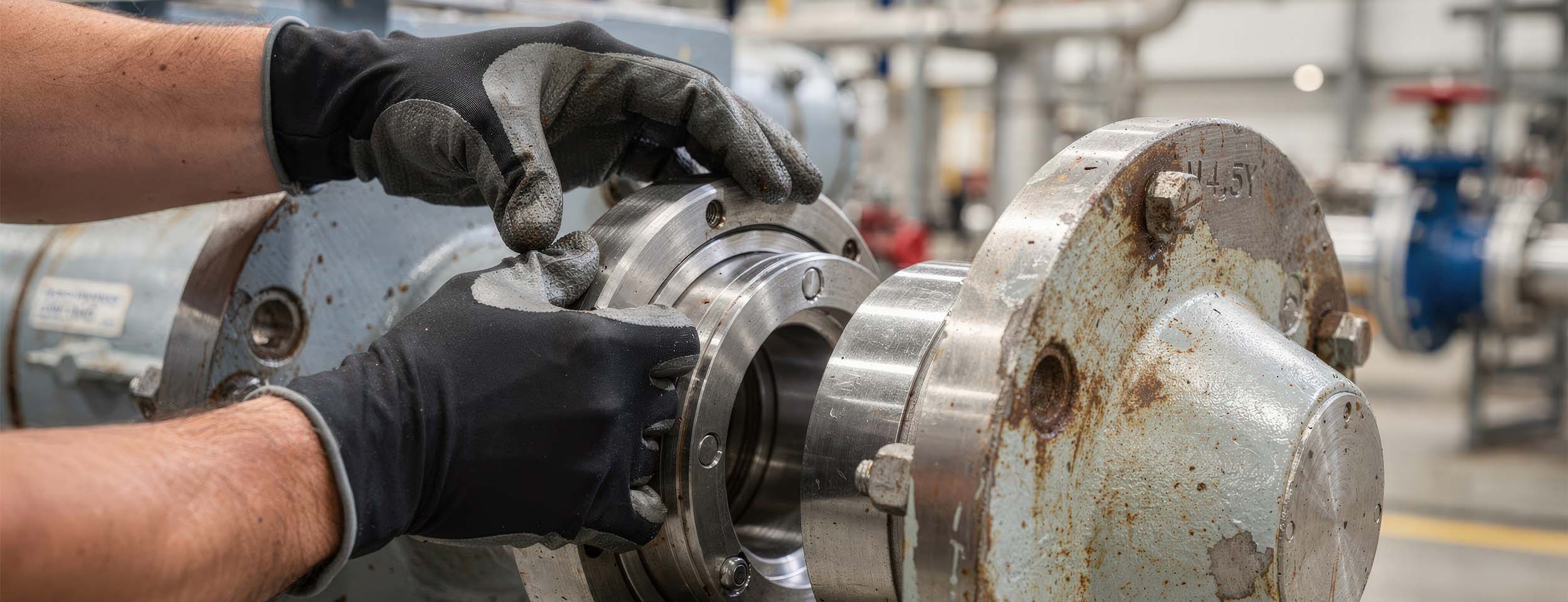
A mechanical seal is a sealing device used to prevent liquid from leaking where the pump shaft exits the casing. Mechanical seals are critical in wastewater applications because they help protect bearings and motors while improving pump reliability and reducing maintenance.
The 1U standard refers to a hydraulic performance testing tolerance defined by the Hydraulic Institute for Centrifugal pumps. A pump tested to Grade 1U has tighter performance tolerances for flow, head, efficiency, and power consumption compared to standard commercial testing. This testing helps verify that the pump performs as specified and is commonly used for critical municipal and industrial applications.
For resources on HI testing requirements, refer to HI 14.6.
To properly quote a replacement pump, important information includes the existing pump manufacturer and model number, flow rate, Total Dynamic Head (TDH), motor horsepower, voltage, pipe size, impeller diameter, fluid type, solids content, mounting arrangement, and whether the pump is submersible or dry pit. Photos of the nameplate, installation, and piping are also extremely helpful for confirming compatibility and minimizing modification requirements.
MBR stands for Membrane Bioreactor, which is an advanced wastewater treatment process that combines biological treatment with membrane filtration. Instead of using traditional secondary clarifiers, MBR systems use membranes to separate solids from treated water, producing very high-quality effluent with low suspended solids and bacteria levels. MBR systems are commonly used for water reuse applications, facilities with limited space, and plants requiring strict discharge limits.
MBBR stands for Moving Bed Biofilm Reactor, which is a biological wastewater treatment process that uses small plastic media carriers suspended in the aeration basin to support biofilm growth. The biofilm removes organic material and nutrients as wastewater flows through the system. MBBR systems are popular because they increase treatment capacity without requiring larger basins and are commonly used for plant upgrades, industrial wastewater treatment, and nutrient removal applications.
Mixers are used when the goal is to keep solids suspended or maintain fluid movement without adding oxygen to the process. Aeration systems provide both mixing and oxygen transfer, making them suitable for biological treatment processes that require dissolved oxygen. The decision depends on process requirements, basin geometry, oxygen demand, and operating objectives.
The decision to repair or replace equipment depends on age, condition, reliability, repair costs, and operational impact. Repairs are often appropriate when the equipment remains structurally sound and can be restored cost-effectively. Replacement may be the better option when equipment experiences recurring failures, increasing maintenance costs, parts obsolescence, or reduced performance.
Factors to consider include:
- Frequency of repairs
- Availability of replacement parts
- Equipment age and condition
- Energy efficiency improvements
- Downtime risks
- Long-term lifecycle costs
Evaluating both the immediate repair cost and the long-term operating impact can help determine the most economical solution.